Achieva
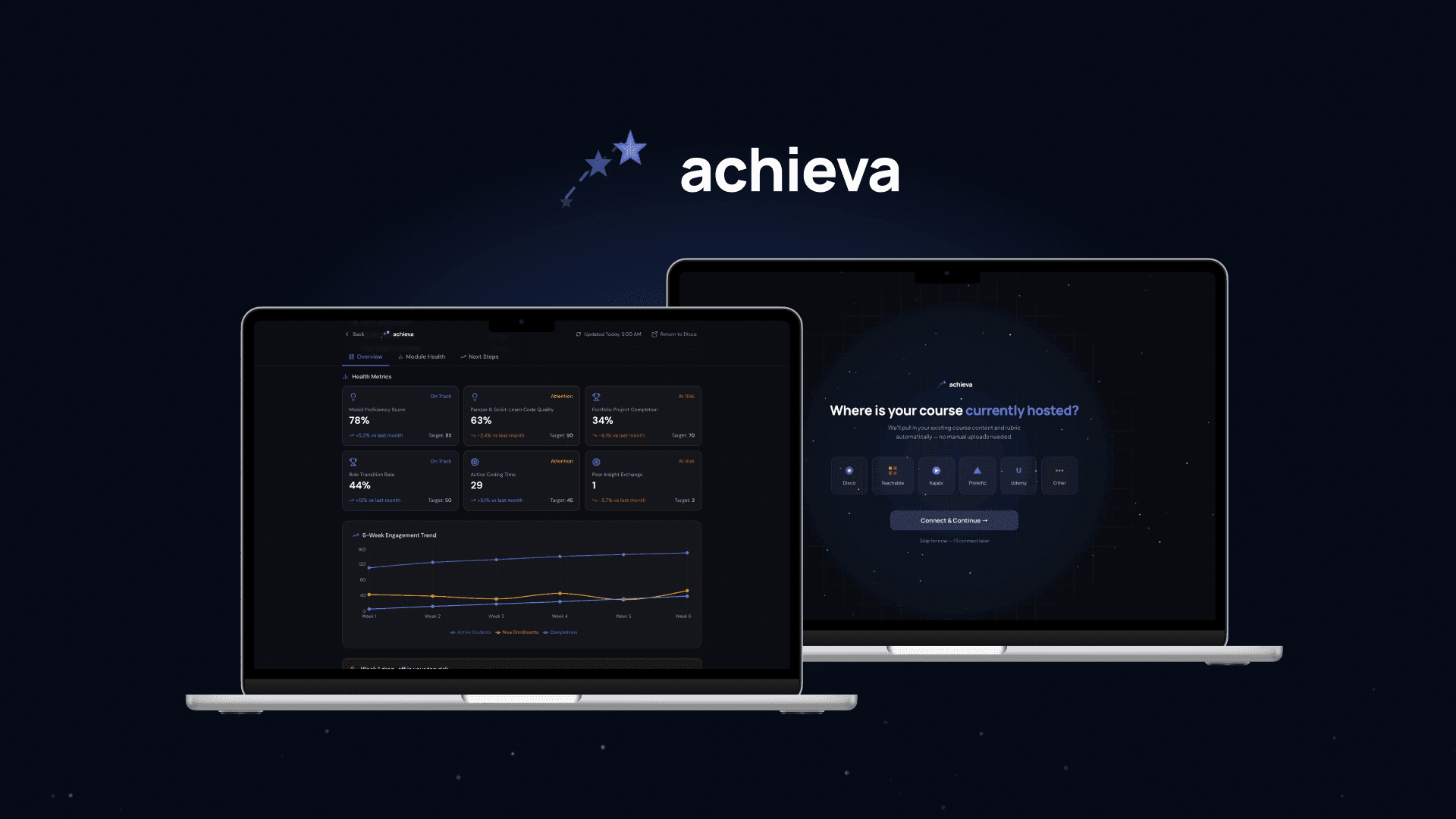
LV 01An EdTech integration that turns a course creator’s own definition of success into personalised metrics and tells them what to do when those numbers slip.
- ROLE
- UX Designer
- PARTY
- 4 Designers
- TIME LOGGED
- 2 Weeks
- SKILLS
- User Research, Product Thinking, Iterative Design
At a Glance
Achieva is an integration for course-building platforms that lets independent creators define what success means for their own course, diagnoses trouble before learners drop off, and hands back next steps they can act on. Built in two weeks at UBC PMC’s Product Sprint, with Disco as the case sponsor.
The Problem
How might we help instructors in the online learning industry better understand and improve learner knowledge retention and course completion?
In the realm of online course creation, there are three main users: Large enterprises training staff, SMB learning business, and solo creators. We focused on solo creators because they carry the highest operational friction but without the same support and resources as the other two groups.
Primary Research
Five structured interviews with solo creators and online-learning PMs, with supporting secondary research, kept returning the same three themes: fragmented tools, unclear metrics, and no guidance on what to do next.
“[Success definition] depends on the person making the course [and is] unique to every course maker.”
“There is no ‘one size fits all’ solution [because] all instructors have a different measure of success.”
Pain Points
Based on our research, we found three overarching pain points that are experienced by solo creators when creating and managing their courses.
- 01An overload of manual tasks takes time away from teaching and community-building
- 02Generic course metrics are hard to act on, so drop-offs are noticed rather than prevented
- 03Low visibility into learner struggles delays support until after the learner has gone
With these pain points in mind, we defined our problem statement to specifically fit our users and their problems
How might we help solo course creators translate their course goals into the right success metrics and actionable next steps
The Current Market
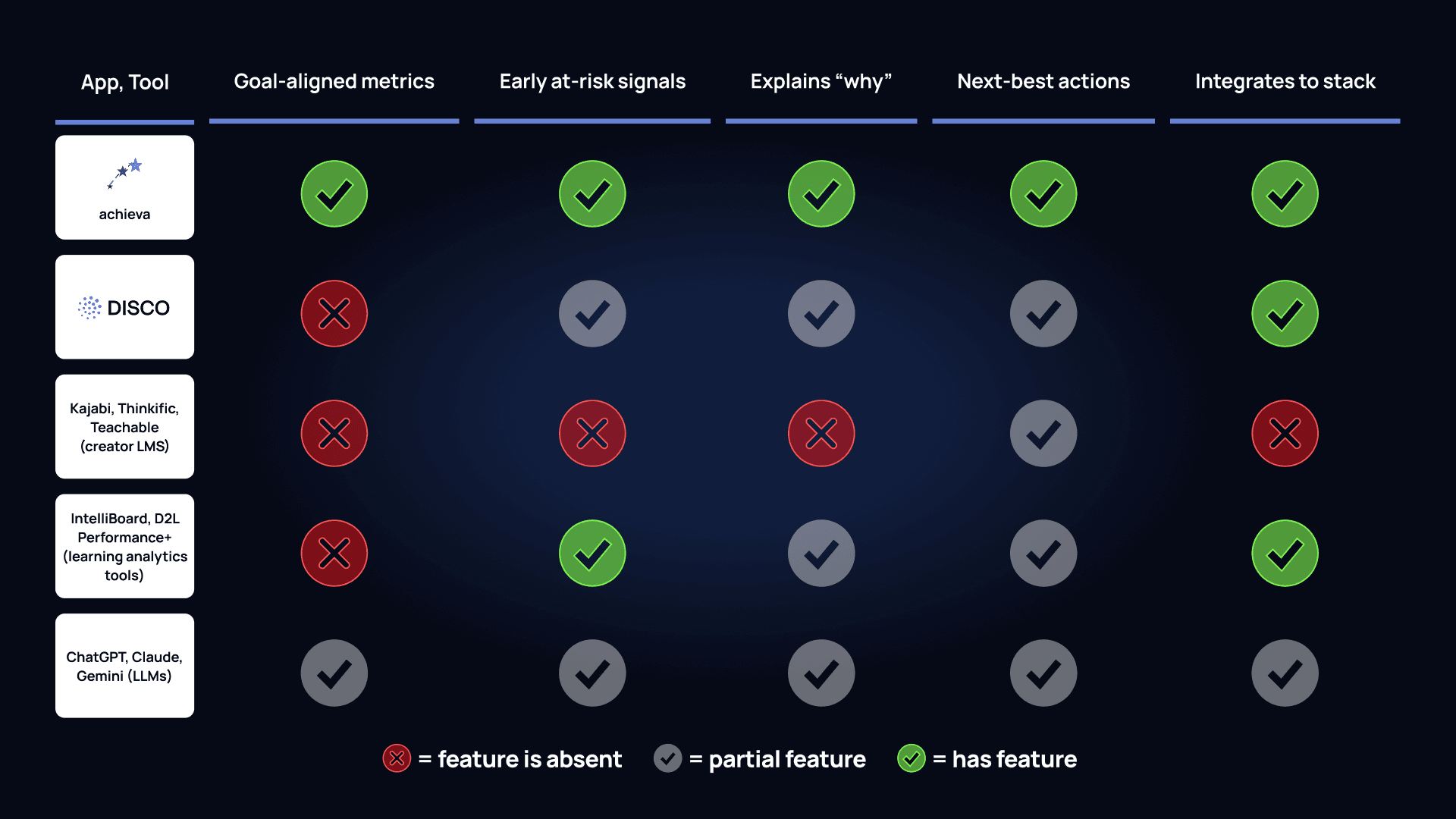
Many of the current EdTech platforms used by solo creators to host online courses do not provide personalised, goal-aligned metrics and early risk prevention in one flow like Achieva.
The Solution
Achieva is an integration that allows solo creators to customise their course metrics so that they can define success in their own terms. Creators also have access to AI-generated solutions that acts as an early-risk prevention plan, allowing them to focus on building the course than worrying about logistical details.
(p.s. you can click through it)
Key Decisions
An integration, not a standalone app
While designing Achieva, we chose to make it an integration rather than a standalone app for three main reasons.
- 01Reduces tool switching by allowing users to connect courses across multiple platforms into one tool
- 02Keeps existing courses, communities, and workflows that the users have already built and established
- 03Centralises signals and interventions in one place so users know where to look for all their courses
Guided but flexible onboarding
We wanted to keep the onboarding process simple and easy for creators to go through while allowing them to input any information they want with as much or as little detail as they want to describe what they want to get out of their course.
During onboarding, creators can choose up to 3 out of 6 broad goals and then write a more specific description of what they want, and Achieva turns those into personalised metrics that can also be customised or regenerated based on the creators needs.
Keeping users in control over AI decisions
While AI is a convenient tool, not every user is going to have the same amount of trust and preference for the given solutions. We wanted to give the creators support while still giving them the freedom to choose what fits their needs best so every generated output can be edited, regenerated, drafted for later use, or implemented immediately.
Reflections
Impact
First place at UBC PMC’s 2026 Product Sprint, competing against 16 other teams and compelting 2 rounds of judging
What I Learned
Trust the Data, Not Assumptions
Working on a product in an industry I wasn't directly familiar with was uncomfortable at first because I didn't have any direct intuitions or knowledge to guide me. I had to rely on our research and insights which ended up producing a much better and more thought out project
Put Intention into Every Design Decision
Even though it took more time to think about why you choose to do things a certain way rather than just designing what feels good to you, being intentional with all our decisions made our product much more connected and empathetic to its users. It was also helpful to us as designers to bettter understand our target audience by putting ourselves in their shoes.